
Blog · 7 November 2026 · 6 min read
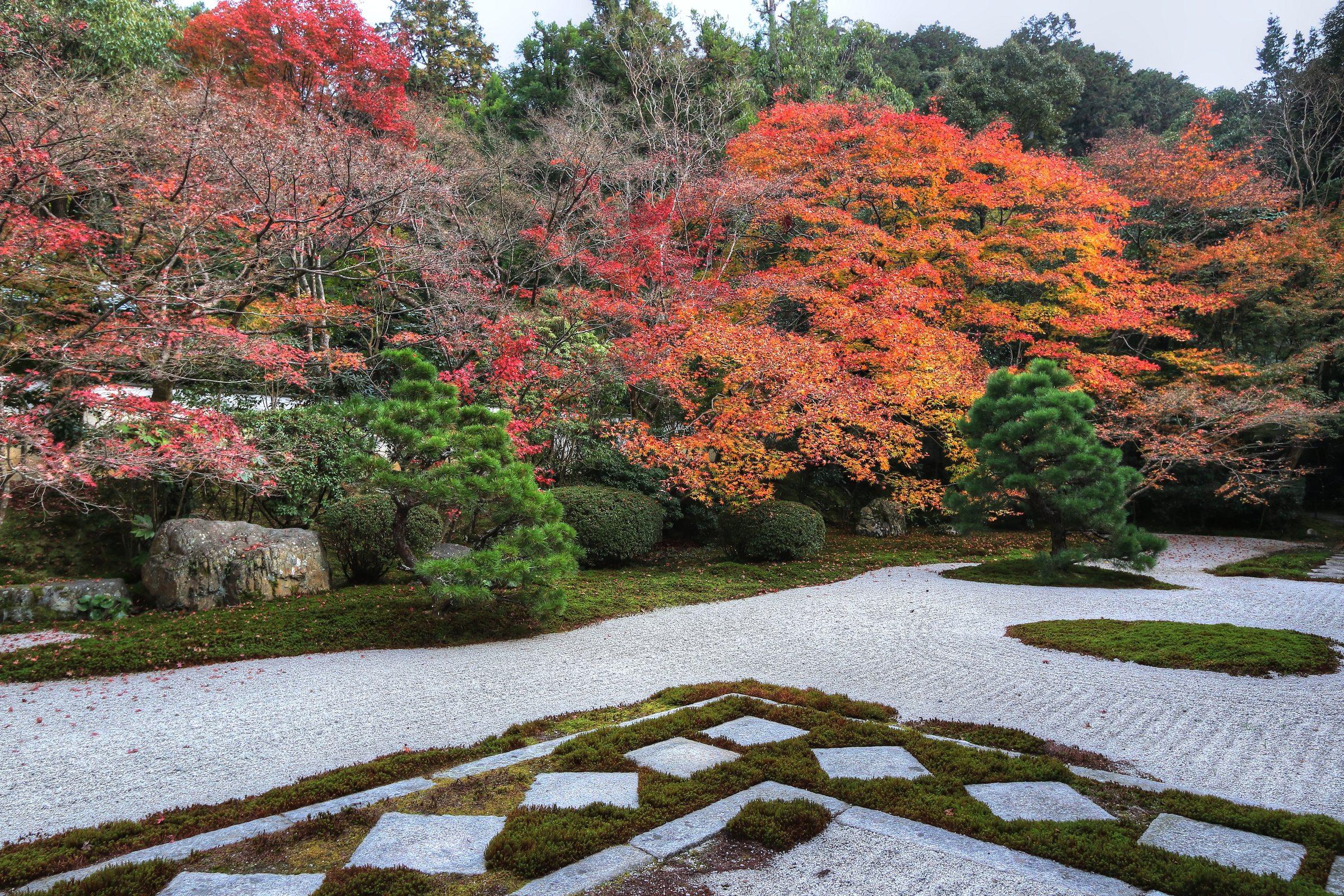
Photo: くろふね on Wikimedia Commons (CC BY 3.0)

Tenjuan is one of Kyoto's quietest great gardens. A small sub-temple inside the grounds of Nanzen-ji, it has two gardens in one visit: a Zen garden of white gravel and moss crossed by a geometric stone path, and a pond garden hidden in the woods behind it. In mid to late November, the maples over both turn red and orange, and yet it rarely feels as crowded as Kyoto's famous autumn spots. This guide covers the history, the gardens, opening hours, the best time for autumn leaves, and how to fit Tenjuan into a day in eastern Kyoto.
The short version
- Open 9 am to 4:30 pm. ¥500 for adults.
- Autumn leaves: usually best from mid to late November.
- In 2026: closed on the afternoon of November 11 and the morning of November 12 for a temple event. No evening light-up this year.
- Allow 30 to 45 minutes for both gardens.
- Getting there: about 10 minutes on foot from Keage Station on the Tozai subway line.
A short history
Nanzen-ji was founded in 1291 by the retired Emperor Kameyama, who turned his villa in the eastern hills into a Zen temple, with the monk Mukan Fumon as its first abbot. Nanzen-ji went on to become one of the most important Zen temples in Japan, and it is still surrounded by its own smaller sub-temples.
Tenjuan is one of them. In 1339, with the permission of Emperor Kogon, the Zen monk Kokan Shiren built it as the memorial temple of Mukan Fumon. Like much of Kyoto, it was later lost to fire and war, and it lay in ruins for a time. In 1602, the warlord and poet Hosokawa Yusai paid for it to be rebuilt. His main hall, with its roof of wooden shingles, still stands, along with the old study hall and the main gate.
Inside the main hall are sliding-door paintings by Hasegawa Tohaku, one of the great painters of the age, now an Important Cultural Property. The hall isn't open to the public, so a visit is all about the gardens.
The two gardens
The front garden: white gravel, moss and a stone path
The garden in front of the main hall is a dry landscape garden: raked white gravel, islands of moss, pines and maples. Its signature is the path of square stones laid in a diagonal, zig-zag pattern across the moss, leading to the hall. It's said to draw on the ideas of Kobori Enshu, the famous garden designer of the early Edo period. In autumn, the red maples behind the gravel make this one of the most photographed views in eastern Kyoto.
The south garden: a pond in the woods
Behind the study hall, a path leads into a pond garden designed to be walked around. Stepping stones cross the water, carp swim under the bridges, and tall trees close in on all sides, so it feels far from the city. It was reworked in the Meiji period. It's cool and green in summer and full of colour in late autumn.
When to go
| Season | What to expect |
|---|---|
| Mid to late November | Peak autumn leaves. Colours usually begin in early November. The front garden tends to turn first, the pond garden later |
| Spring and early summer | Fresh green maples against the white gravel and moss |
| Winter | Quiet, with the bare structure of the gardens on show |
Tenjuan is busiest in late November, but it is still calmer than the most famous autumn spots nearby. For the quietest visit, come soon after it opens at 9 am. Autumn colour depends on the weather each year, so check a recent leaf report before you go.
Opening hours and tickets
| Details | |
|---|---|
| Hours | 9 am to 4:30 pm |
| Adults | ¥500 |
| High school students | ¥400 |
| Elementary and junior high school students | ¥300 |
| Closures in 2026 | Afternoon of November 11 and morning of November 12, for a temple event |
| Evening light-up | None in 2026 |
Tenjuan doesn't have its own website, so these details come from 2026 travel guides. Call the temple on 075-771-0744 if you need to be sure of the hours on a particular day.
Getting there
- By subway: Keage Station on the Tozai Line, then about 10 minutes on foot. Nanzen-ji recommends the short cut through the Nejiri-manpo, a brick tunnel under the old incline railway, which leads straight towards the temple.
- By bus: city bus to Nanzenji/Eikando-michi or Higashi-Tennocho, then about 10 minutes on foot.
- By car: Nanzen-ji's car park charges ¥1,000 for up to 2 hours, but from mid-November to mid-December it may be for buses only. Public transport is easier in autumn.
Making a day of it at Nanzen-ji
Tenjuan is inside the grounds of Nanzen-ji, so it's easy to combine with the rest of the temple and the Higashiyama area. Our guide to Nanzen-ji covers it all in more detail.
- The Sanmon gate: Nanzen-ji's huge wooden gate. Climb to the balcony for a view over the temple and the city (¥600 for adults).
- The Hojo garden: Nanzen-ji's own dry garden, attributed to Kobori Enshu and a designated Place of Scenic Beauty (¥600 for adults).
- Nanzen-in: the garden at the site of Emperor Kameyama's villa. It is closed for repair work until spring 2027, but opens for a special viewing from November 1 to 30, 2026 (¥500 for adults).
- The aqueduct: a red-brick aqueduct from the Meiji period runs right through the temple grounds, a favourite photo spot.
- Eikando and the Philosopher's Path: to the north, for more autumn leaves and a canal-side walk.
See Kyoto with a private guide
Places like Tenjuan are easy to walk past without knowing what you're looking at. A private guide changes that: they explain the history and the meaning behind the gardens, take you at your own pace, and help you avoid the busiest times. On a private tour, it's just you and your own group, never strangers.
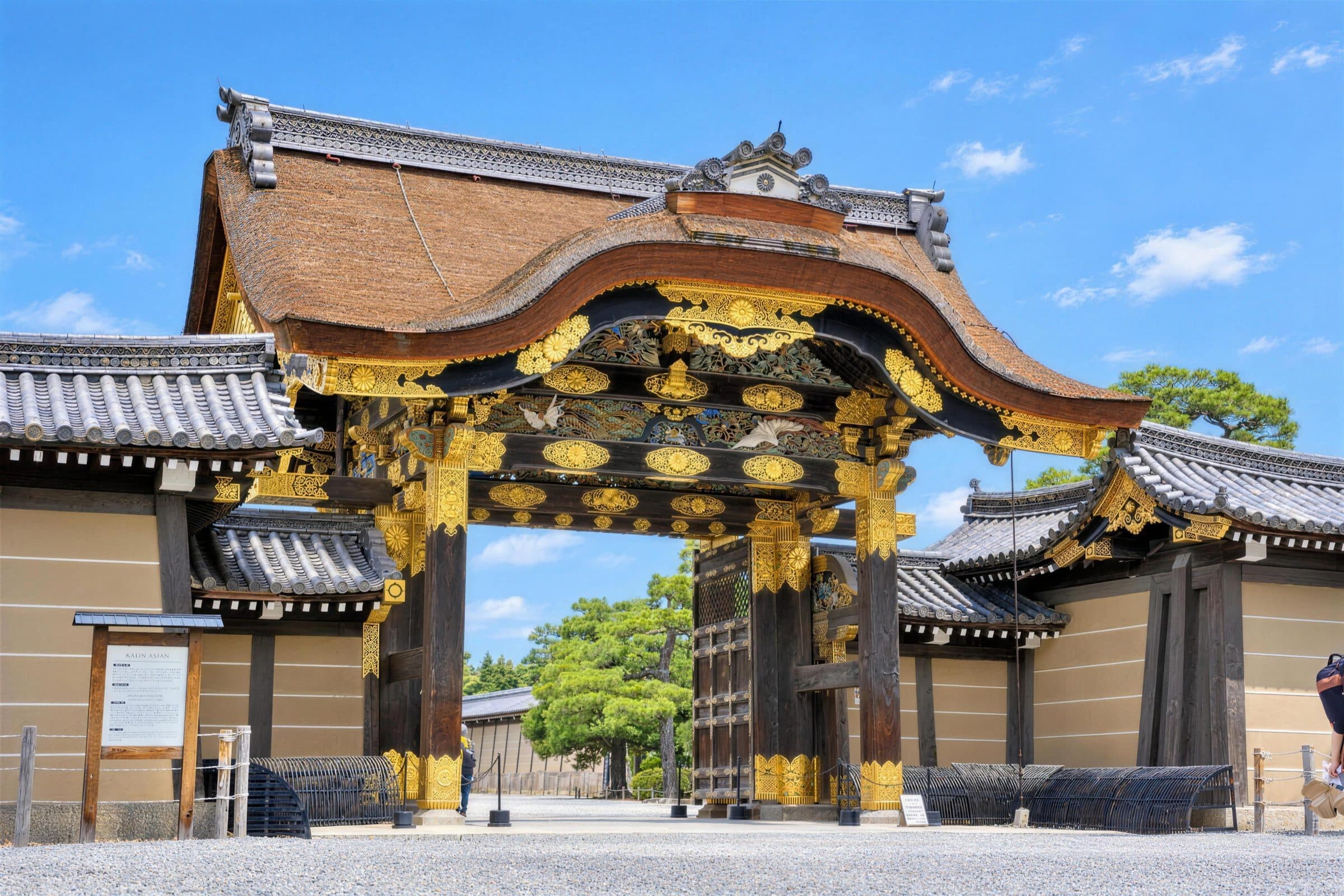
Our private Nijo Castle and Imperial Palace tour takes you through the shogun's castle and the emperors' palace with your own English-speaking guide. Our guides to Nijo Castle's nightingale floors and the Kyoto Imperial Palace give a taste of what you'll see.
Book this tour
Kyoto: 2.5-Hour Private Nijo Castle & Imperial Palace Tour
A private walk through the shogun's Nijo Castle and the Kyoto Imperial Palace, with an English-speaking guide.
2 h 30 min · Kyoto · Nijo
Want a private guide for another part of Kyoto, or a date that isn't on the calendar? Get in touch and tell us what you'd like to see.
Please note. We wrote this guide in November 2026. Tenjuan has no official website, so its hours, fees and 2026 closures come from Walkerplus's 2026 autumn leaves guide and Keihan's seasonal guide. Nanzen-ji's details come from its official website. Check before you go.
Sources
- Walkerplus: Tenjuan autumn leaves 2026 (Japanese)
- Keihan: Tenjuan (Japanese)
- Tabi-mag: Tenjuan (Japanese)
- Rurubu: Tenjuan (Japanese)
- Nanzen-ji: History (Japanese)
- Nanzen-ji: Visiting hours and fees (Japanese)
- Nanzen-ji: Autumn 2026 special viewings (Japanese)
- Nanzen-ji: Access (Japanese)
Frequently asked questions
What is Tenjuan?
Tenjuan is a sub-temple of Nanzen-ji in eastern Kyoto, founded in 1339 as the memorial temple of Nanzen-ji's founding abbot. It is known for its two gardens: a dry garden of white gravel, moss and a geometric stone path, and a pond garden in the woods behind it.
What are Tenjuan's opening hours?
9 am to 4:30 pm, according to 2026 guides. It can close for temple events: in 2026 it is closed on the afternoon of November 11 and the morning of November 12.
How much does Tenjuan cost?
¥500 for adults, ¥400 for high school students and ¥300 for elementary and junior high school students. It's a separate ticket from Nanzen-ji's own gardens and Sanmon gate.
When are the autumn leaves best at Tenjuan?
The maples usually start to turn in early November and are at their best from mid to late November, depending on the weather. The front garden tends to colour a little earlier than the pond garden, so late November is a good time to see both.
Is there an autumn light-up at Tenjuan in 2026?
No. Tenjuan used to open in the evening for an autumn light-up, but 2026 guides list no light-up this year.
Can you see the Hasegawa Tohaku paintings at Tenjuan?
No. The sliding-door paintings by Hasegawa Tohaku, an Important Cultural Property, are inside the main hall, which isn't open to the public. Visitors see the gardens and the outside of the buildings.
How do I get to Tenjuan?
Take the Tozai subway line to Keage Station and walk about 10 minutes to Nanzen-ji, through the brick tunnel known as the Nejiri-manpo. Tenjuan is inside the Nanzen-ji grounds.