
Blog · 3 November 2026 · 7 min read
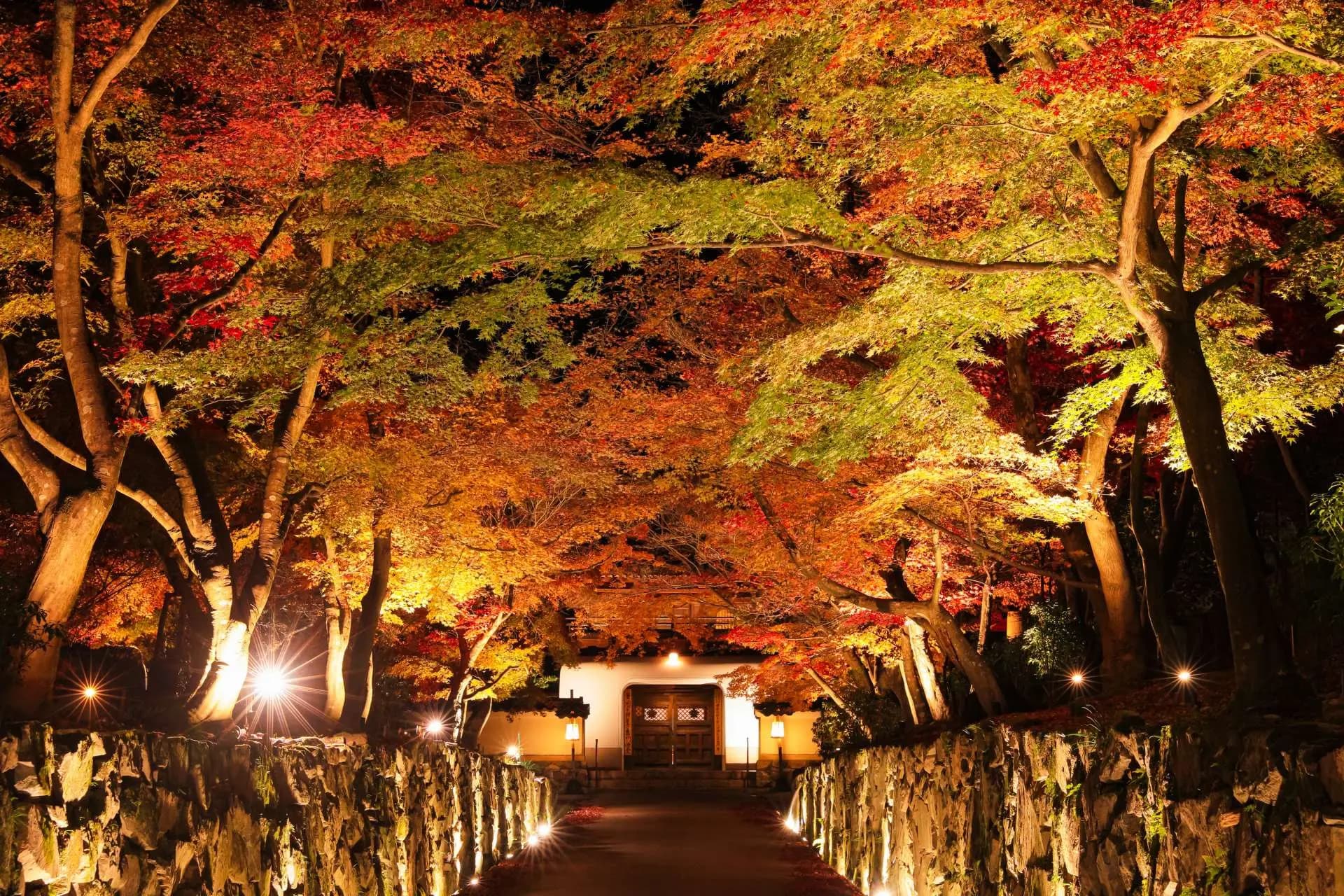
Kyoto's famous maple temples are packed in late November. Twenty to thirty minutes south by train, Uji has autumn colours of its own and far fewer people. The highlight is Kotozaka, the maple-lined slope leading up to Koshoji temple, which turns into a tunnel of red at the end of autumn. This guide covers when to go, the best places to see the leaves in Uji, and a half-day route that links them.
The short version
- Uji's leaves usually peak from late November to early December. Byodo-in starts a little earlier, from mid-November.
- Don't miss Kotozaka at Koshoji, a 200-metre slope of maples about 15 to 20 minutes' walk up the river from Uji Bridge.
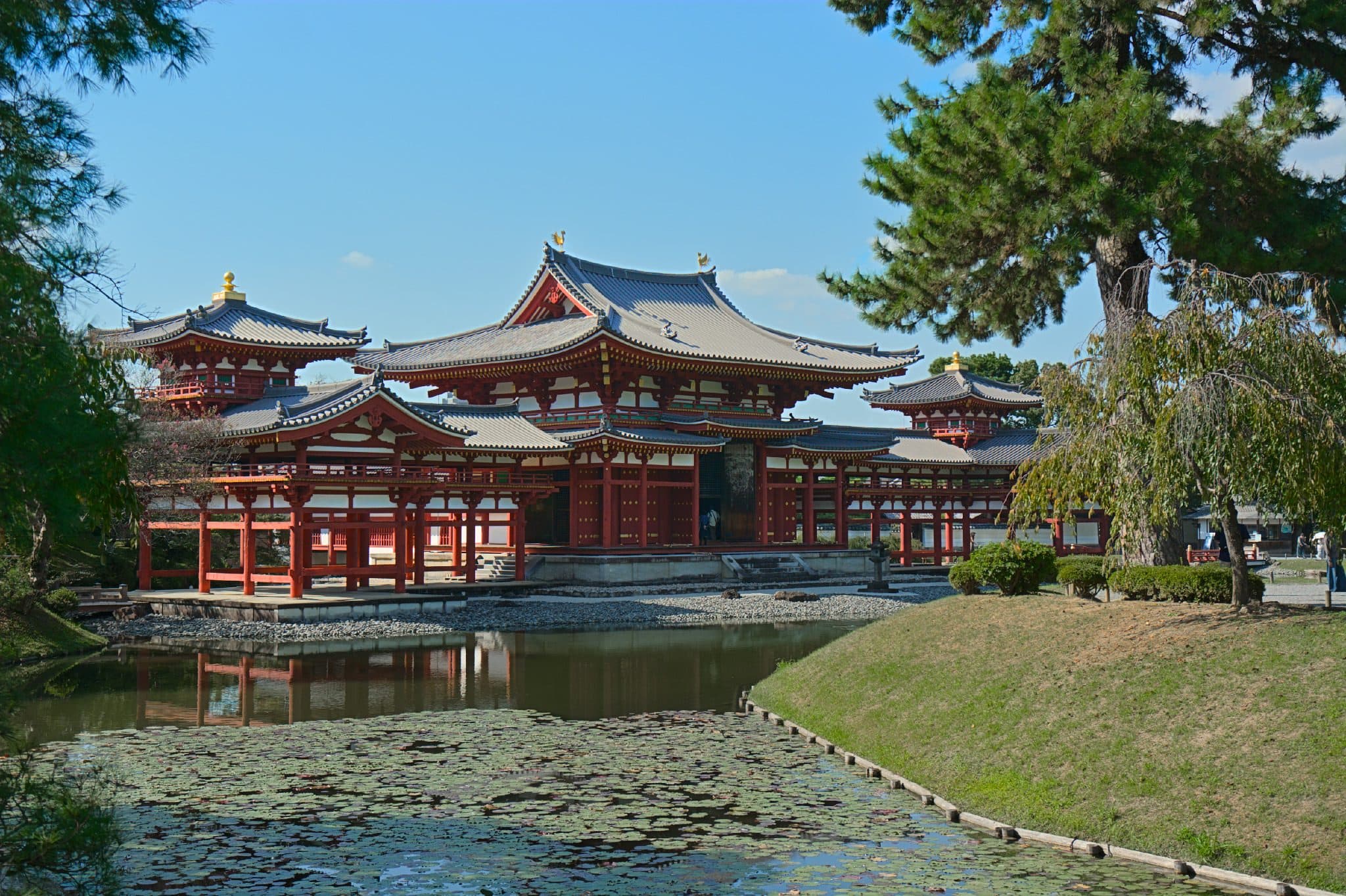
- Byodo-in has about 200 maples around the Phoenix Hall. Arrive at 8:45, when it opens.
- Mimurotoji, one stop away on the Keihan line, has been an autumn-leaf spot since the Edo period and is quieter than central Kyoto.
- Walk along the Uji River between them: the hills on both banks turn red and gold.
When to see the leaves
Uji's maples usually start turning in mid-November and are at their best from late November to early December, about the same time as central Kyoto. Each year is different: a warm autumn delays the colours, and a sudden cold spell brings them on quickly. These are the usual peak periods given by each place:
| Where | Usual peak | Opening hours | Admission |
|---|---|---|---|
| Byodo-in | Mid-November to early December | Garden 8:45 to 17:30 (last entry 17:15) | ¥700, with the museum |
| Koshoji (Kotozaka) | Late November to early December | Reception 10:00 to 16:00 | ¥500 |
| Mimurotoji | Late November to early December | 8:30 to 15:10 | ¥1,000 (children ¥500) |
| Uji River banks | Late November to early December | Any time | Free |
For the most up-to-date picture, look for recent photos of Kotozaka or Byodo-in on social media in the week before you go.
Koshoji and Kotozaka
Koshoji (興聖寺) is a working Soto Zen temple on the east bank of the Uji River. Its approach, Kotozaka (琴坂, “koto slope”), climbs gently for about 200 metres from the stone front gate by the river to the temple's main gate. A small stream runs beside the path, and its sound is said to resemble a koto, the Japanese harp, which gave the slope its name. Maples grow on both sides, and from late November they close over the path in a tunnel of red. Kotozaka is a Place of Scenic Beauty designated by Kyoto Prefecture, and it is just as pretty with fresh green leaves in spring.
At the top stands the main gate, a white, Chinese-style gate in the ryugu-zukuri (“dragon palace”) style, last rebuilt in 1844.
A temple with a long history
- 1233. Dogen, the monk who brought Soto Zen to Japan from China, founded Koshoji at Fukakusa, south of Kyoto, soon after returning from China. After he moved to Echizen (today's Fukui) in 1243, the temple declined and was eventually abandoned.
- 1648. Nagai Naomasa, the lord of nearby Yodo Castle, rebuilt Koshoji on its present site in Uji, on land that had been a tea garden. Some buildings came from the dismantled Fushimi Castle.
- The “blood ceiling”. The ceiling of the main hall is made from floorboards taken from Fushimi Castle, where the defenders led by Torii Mototada took their own lives after the castle fell in 1600. Their bloodstains are still on the boards.
If you're visiting in autumn 2026. From 19 November to 6 December, Koshoji is showing temple treasures connected with Emperor Go-Mizunoo, Empress Tofukumon-in and Nagai Naomasa in its Daishoin hall, marking 400 years since the emperor's 1626 visit to Nijo Castle. It runs 10:00 to 16:00 and costs ¥1,000 (free for high school students and younger). Zazen meditation and sutra copying are not available from 14 November to 13 December.
Getting there: from Uji Bridge, walk upstream along the east bank of the Uji River. The temple gives the walk as about 15 to 20 minutes from Keihan Uji Station and 25 to 30 minutes from JR Uji Station. Admission to the temple is ¥500, and reception is open 10:00 to 16:00.
Byodo-in
Byodo-in, Uji's most famous temple, has about 200 maple trees in its grounds, which usually colour from mid-November to early December. The view of the Phoenix Hall across its pond, framed by red leaves, is one of the classic autumn scenes of the Kyoto area. The garden opens at 8:45, and the first hour is the quietest. Admission is ¥700, including the Hoshokan museum; seeing inside the Phoenix Hall costs ¥300 more. For the history and how to visit, read our Byodo-in temple guide.
On 10 and 11 November 2026, the Phoenix Hall has maintenance work, so expect workers and ladders on and around the building on those days.
The Uji River walk
The forested hills on both sides of the Uji River turn red and gold in late autumn, and walking upstream from Uji Bridge is one of the nicest ways to see them. Kyoto Prefecture recommends starting from the crossroads at the east end of Uji Bridge, beside Keihan Uji Station (about 7 minutes' walk from JR Uji Station), and following the river up to Koshoji. On the way you pass Takumi no Yakata, a tea house where you can learn to brew Uji tea, if you want a warm drink.
Mimurotoji
Mimurotoji (三室戸寺) is best known for its hydrangeas in June and azaleas in May, but its maples have been famous for centuries: in the Edo period, “the red maples of Mimurotoji” was counted among the Twelve Views of Uji. The temple calls itself a hidden autumn-leaf spot where you can enjoy the colours at a relaxed pace, and its peak is late November to early December.
Getting there: take the Keihan Uji Line one stop from Uji to Mimurodo, then walk about 15 minutes. From JR Uji Station, take a taxi. The temple is open 8:30 to 15:10, and admission is ¥1,000 for adults and ¥500 for children. It closes earlier than the others, so go in the morning or straight after lunch.
A half-day autumn route
- 8:45, Byodo-in. Arrive at opening time and see the Phoenix Hall and its maples before the tour groups.
- 10:00, along the river to Koshoji. Cross to the east bank and walk upstream. You'll reach Kotozaka around the time the temple opens.
- 11:00, Ujigami Shrine and Uji Shrine. Walk back down past the two shrines. Ujigami Shrine's main hall is the oldest surviving shrine building in Japan.
- Lunch and matcha. Finish at the tea shops by Uji Bridge and on the street leading to Byodo-in. Our Uji matcha guide lists the best ones.
- Optional: Mimurotoji. Take the Keihan train one stop after lunch, and arrive well before it closes.
Tips
- Go on a weekday morning. Autumn weekends are the busiest time of the year, especially at Byodo-in in the middle of the day.
- Take the train. Uji is about 20 to 30 minutes from Kyoto Station on the JR Nara Line, or take the Keihan Uji Line. Roads and car parks fill up in autumn.
- Bring layers. Late November mornings by the river are cold, often below 10°C.
- Combine it with Fushimi Inari. Inari Station is on the same JR line, so you can see Uji in the morning and Fushimi Inari in the afternoon or evening.
See Uji with a local guide
Our two-hour Uji walking tour covers Byodo-in's Phoenix Hall, Uji Shrine, Ujigami Shrine and Uji Bridge, with the stories behind them. Koshoji is a short walk upriver from the shrines, so it's easy to head there for the maples after the tour, and your guide can point you the way. See tour dates and prices or ask us anything about visiting Uji in autumn.
Book this tour
Kyoto Uji: 2-Hour Byodo-in & Shrines Guided Walking Tour
Walk Uji with a guide: Byodo-in's Phoenix Hall, Japan's oldest surviving shrine building and the bridge from The Tale of Genji.
2 hours · Kyoto · Uji
Please note. We wrote this guide in November 2026 from the official websites of Koshoji, Byodo-in and Mimurotoji and from Kyoto Prefecture. The autumn colours change every year, and so can prices and opening hours, so check before you go.
Sources
- Koshoji: Visiting and access (Japanese)
- Koshoji: Special opening for the 400th anniversary of the Kan'ei imperial visit (Japanese)
- Kyoto Prefecture: Autumn leaves at Koshoji (Japanese)
- Kyoto Prefecture: Autumn leaves along the Uji River (Japanese)
- Wikipedia: Koshoji (Uji) (Japanese)
- Walkerplus: Autumn leaves at Koshoji (Japanese)
- Byodo-in: Visitor guide (Japanese)
- Byodo-in: Seasons at Byodo-in (Japanese)
- Mimurotoji: Autumn leaves (Japanese)
- Mimurotoji: Visitor guide (Japanese)
Frequently asked questions
When do the autumn leaves peak in Uji?
Usually from late November to early December. Byodo-in gives its maple season as mid-November to early December, and Koshoji and Mimurotoji usually peak from late November. The timing moves by a week or more depending on the weather, so check recent photos or the temples' websites before you go.
What is Kotozaka?
Kotozaka is the approach to Koshoji temple, a gentle slope of about 200 metres from the temple's front gate by the Uji River up to its main gate. Its name means 'koto slope', because the stream running beside it sounds like a koto, a Japanese harp. Maples line both sides, and in late autumn they form a red tunnel. It is a Place of Scenic Beauty designated by Kyoto Prefecture.
How do I get to Koshoji from Uji Station?
Walk upstream along the east bank of the Uji River from Uji Bridge. The temple gives the walk as about 15 to 20 minutes from Keihan Uji Station and 25 to 30 minutes from JR Uji Station. Keihan Uji Station is at the east end of Uji Bridge, on the same side of the river as Koshoji.
Can I see autumn leaves at Byodo-in?
Yes. Byodo-in has about 200 maple trees in its grounds, which usually turn from mid-November to early December. The garden opens at 8:45, so come early to see the Phoenix Hall and its maples before the crowds.
Is Uji less crowded than Kyoto in autumn?
Generally yes, though Byodo-in gets busy on autumn weekends. Kyoto Prefecture calls Kotozaka a hidden autumn-leaf spot, and Mimurotoji describes itself the same way. Uji is also only 20 to 30 minutes from Kyoto Station by train, which makes it a calmer alternative to Kyoto's most famous maple temples.
How long do I need to see the autumn leaves in Uji?
Half a day covers Byodo-in, the Uji River walk and Koshoji, with time for matcha. Add an hour and a half or so if you also want to visit Mimurotoji, which is a train stop away.