
Blog · 24 October 2026 · 9 min read
Photo: Payoon Gerinto on Unsplash
Matcha as the world knows it was perfected in Uji. This small riverside town between Kyoto and Nara has grown tea for about 800 years, and the growing methods that give matcha its colour and sweetness were developed here. Today Uji is the best place in Japan to drink matcha where it was made, watch it being ground, try a tea ceremony and take some home. This guide explains why Uji tea is special, where to drink and buy it, and how to fit it around a visit to Byodo-in.
The short version
- Uji has grown tea since the 13th century and developed the shaded growing that makes matcha and gyokuro sweet and bright green.
- For matcha and sweets, walk Byodo-in Omotesando, the tea-shop street leading to Byodo-in, or visit Nakamura Tokichi and Tsuen, which traces its history to 1160.
- For a tea ceremony, the city-run tea house Taihoan serves matcha with a sweet in a traditional tea room, no booking needed.
- To make your own, grind matcha on a stone mill at Sankyuan or Fukujuen (book ahead).
- Many shops limit how much matcha you can buy, so expect one tin per person for popular grades.
Why Uji is famous for tea
Tea came to Japan from China, but Uji turned it into something of its own. The short history:
- 9th century. Tea first reached Japan with Buddhist monks who had studied in China, traditionally including Saicho and Kukai. The first reliable record is from 815, when the monk Eichu served tea to Emperor Saga at a temple near Lake Biwa, and the emperor ordered tea to be planted around the capital. But tea stayed a rare custom of the court and a few temples, and it faded over the following centuries.
- Late 12th to 13th century. In 1191 the monk Eisai brought tea back from China with the newer way of drinking it: powdered and whisked in a bowl, the ancestor of matcha. He promoted it in Japan's first book on tea. According to tradition, he gave seeds to the monk Myoe, who planted them at Kozanji temple in the hills northwest of Kyoto, and from there tea spread to Uji, whose sloping land, river mists and big differences between day and night temperatures suit it well.
- 15th century. The Ashikaga shoguns sponsored tea gardens in Uji, and Uji tea became the tea of the elite. One of those historic gardens, Okunoyama, survives in Uji today.
- 16th century. As the tea ceremony grew under masters like Sen no Rikyu, Uji farmers began shading their tea plants with reed and straw covers before harvest. Less sunlight makes the leaves less bitter, sweeter and a deeper green: the qualities that define good matcha.
- 18th to 19th century. In 1738 Nagatani Soen, from Ujitawara just south of Uji, developed the steam-and-hand-roll method still used for sencha, Japan's everyday green tea. Combining shading with that method later produced gyokuro, Japan's most prized leaf tea.
In 2015, the tea landscapes, shops and temples of Uji and the surrounding Yamashiro area were among the first places named Japan Heritage by Japan's Agency for Cultural Affairs, under the title “A Walk through the 800-year History of Japanese Tea”.
One thing to know when you shop: “Uji tea” (宇治茶, Uji-cha) is a regional brand, not a guarantee the leaves grew inside Uji city. It means tea grown in Kyoto, Nara, Shiga or Mie prefectures and finished by Kyoto tea makers using Uji methods. Tea from the Uji area itself is usually labelled with the town or garden it came from.
The teas you'll see in Uji
Uji shops sell far more than matcha. These are the main types on the menus and shelves:
| Tea | How it's grown and made | What it's like |
|---|---|---|
| Matcha (抹茶) | Shaded before harvest. Leaves steamed, dried flat (as tencha) and stone-ground into powder | Whisked into hot water and drunk whole. Rich, sweet and savoury. Usucha is thin, koicha thick and syrupy |
| Gyokuro (玉露) | Shaded for more than 20 days, then rolled into fine needles | Steeped at a low temperature in tiny cups. Intensely sweet and brothy |
| Kabusecha (かぶせ茶) | Shaded for a shorter time than gyokuro | Between gyokuro and sencha |
| Sencha (煎茶) | Grown in full sun, steamed and rolled | Japan's everyday green tea. Fresh and grassy |
| Hojicha (ほうじ茶) | Roasted green tea | Brown, toasty and low in caffeine |
You'll also see matcha in almost everything else: soft-serve ice cream, parfaits, dango (rice dumplings), soba noodles and lattes. They are a fun way to taste Uji tea, but for the real thing, order a bowl of matcha with a traditional sweet.
Where to drink matcha
Most tea shops and cafés are within a ten-minute walk of each other, between Uji Bridge and Byodo-in.
- Byodo-in Omotesando. The short street leading to Byodo-in is lined with tea merchants, many of them generations old, selling tea, matcha sweets and soft-serve. It's the easiest place to try several shops in one walk.
- Tsuen (通圓). At the east end of Uji Bridge, this tea house traces its history to 1160, when its founder, a retainer of the warrior Minamoto no Yorimasa who guarded the bridge, began serving tea to travellers. The family that runs it today is in its 24th generation, and the building incorporates a merchant house from 1672. It is often called Japan's oldest tea shop.
- Nakamura Tokichi (中村藤吉). Founded in 1854 and the best-known name in Uji. The main store near JR Uji Station is a former tea merchant's house with a café serving matcha, sweets and its famous matcha jelly. A second branch stands by the river near Byodo-in. Expect a queue, especially at weekends.
- Ito Kyuemon (伊藤久右衛門). A tea maker founded in 1832 in neighbouring Ujitawara, with a main store and café in Uji known for its matcha parfaits.
Tea ceremonies and hands-on experiences
Uji has plenty of ways to experience tea, from a bowl of matcha in a tea room to grinding your own. These are the main options, with the prices published by Kyoto Prefecture:
| Where | What you do | Price | Booking |
|---|---|---|---|
| Taihoan, city-run tea house | Matcha with a seasonal sweet in a tea room by the Uji River. Also gyokuro and sencha, and a chance to make matcha yourself | ¥500 for matcha; ¥1,200 to make it yourself | Not needed for a bowl of matcha. 3 days ahead for sets and making it yourself |
| Sankyuan, Byodo-in Omotesando | Grind tea leaves into matcha on a stone mill, then whisk and drink it with a sweet | ¥800 per person, excluding tax | Required |
| Fukujuen Uji tea workshop | Stone-mill matcha grinding, hand-rolling tea and other workshops | Varies by course | Required |
| Takumi no Yakata (Uji tea dojo) | Learn to brew gyokuro, sencha and matcha with a Japanese tea instructor | ¥1,500 | Required |
| Marukyu Koyamaen Makishima factory | Factory tour, an English video and a matcha tasting | ¥500 (returned as a shop voucher) | Required |
Taihoan is open 10:00 to 16:00. It closes from 21 December to 9 January and on the last day of each month (or the last weekday, if that day falls on a weekend or holiday). Same-day tickets are sold at the Uji City Tourist Center next door. Prices and hours change, so check with each place before you go.
If you only have time for one, choose Taihoan for the classic tea-room experience, or the stone mill if you want to understand how matcha is made. Turning the mill yourself shows why good matcha is expensive: grinding it is very slow.
Buying matcha to take home
- Ignore “ceremonial grade”. It's a marketing term used outside Japan, not a Japanese standard. Uji shops describe matcha by use: usucha (thin tea) for everyday drinking, koicha (thick tea) for the highest grades. Price is a good guide to quality, and shops will let you taste or tell you which matcha suits drinking straight versus lattes and baking.
- Buy small and fresh. Matcha fades quickly once opened. A 20 g or 30 g tin is plenty unless you drink it daily. Check the production or best-before date.
- Store it cool and dark. Keep it sealed. Once opened, use it within a few weeks.
- Expect limits. Since late 2024, demand from abroad has outrun supply, and many Kyoto and Uji shops limit matcha to one tin per person for popular grades. If matcha is sold out, try gyokuro or hojicha, which are easier to find and travel well.
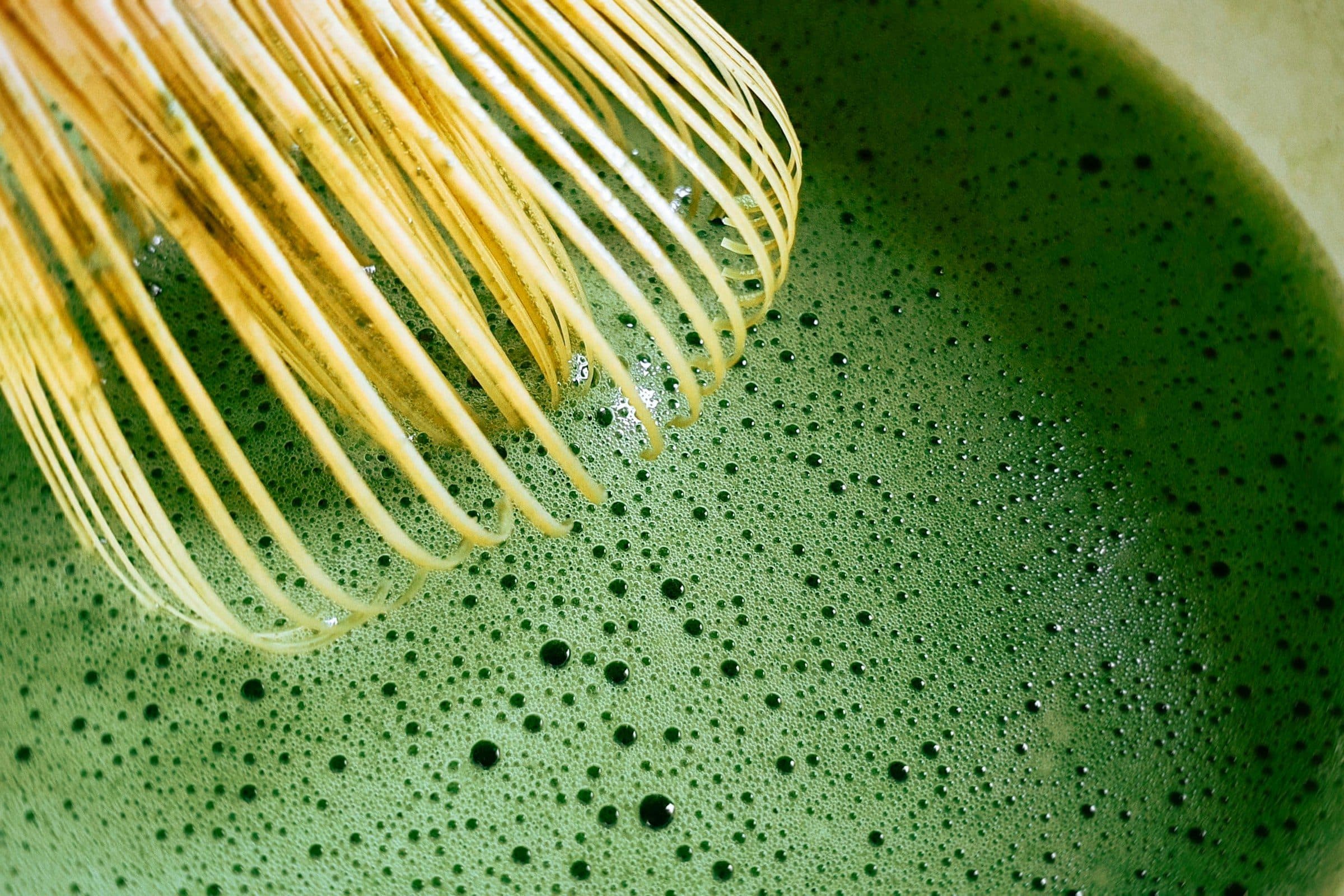
- Pick up a whisk. A bamboo whisk (chasen) makes a huge difference compared with a spoon or milk frother. Many tea shops sell starter sets.
When to go
Uji is pleasant all year, but tea has its seasons. The first harvest of the year runs from late April to late May. This is when the year's first tea, shincha, goes on sale and the best leaves are picked for matcha and gyokuro. Late April is also when the wisteria blooms at Byodo-in. On a Sunday in early October, Uji holds its tea festival: water is drawn from Uji Bridge, tea is ground and offered to the founders of Japanese tea at Koshoji temple, and worn-out tea whisks are given a memorial service. Weekends and holidays are crowded at the most famous cafés, so come on a weekday morning if you can.
Planning your day
Uji is about 20 to 30 minutes from Kyoto Station on the JR Nara Line, or you can take the Keihan Uji Line. Both stations are a short walk from Uji Bridge and Byodo-in. A good half-day:
- Morning: see Byodo-in and its Phoenix Hall before the crowds, then walk the riverside to the shrines on the other bank.
- Late morning: matcha and a sweet at Taihoan or a tea house on Byodo-in Omotesando.
- Lunch: matcha soba, or a café lunch at Nakamura Tokichi.
- Afternoon: a stone-mill grinding session, then shop for tea on the way back to the station.
Uji is on the same JR line as Fushimi Inari, so it's easy to visit both in one day.
See Uji with a local guide
Our two-hour Uji walking tour covers Byodo-in's Phoenix Hall, Uji Shrine, Ujigami Shrine (the oldest surviving shrine building in Japan) and Uji Bridge, the setting of the final chapters of The Tale of Genji. It ends close to the tea shops, so you can follow it with a matcha break, and your guide can recommend where to go. See tour dates and prices or ask us anything about visiting Uji.
Please note. We wrote this guide in October 2026 from Kyoto Prefecture, Ministry of Agriculture and tea-shop sources. Prices, opening hours and purchase limits change, so check with each shop or tea house before you go.
Sources
- Ministry of Agriculture, Forestry and Fisheries: Uji tea (Japanese)
- Japan Tourism Agency: Japanese tea, a historical overview
- Kyoto Prefecture: Tea experiences in the Yamashiro area (Japanese)
- Kyoto Prefecture: Japan Heritage, 800 years of Japanese tea history (Japanese)
- Wikipedia: Tsuen Tea
- Tokyo Cheapo: The matcha shortage in Japan
Frequently asked questions
Why is Uji famous for matcha?
Uji has grown tea for about 800 years. In the 15th century the Ashikaga shoguns sponsored its tea gardens, and in the 16th century Uji farmers developed shaded cultivation, covering the tea plants before harvest to make the leaves sweeter and greener. That method produces the leaves used for matcha and gyokuro, and Uji tea became the standard for the tea ceremony.
When did tea come to Japan?
Tea first came to Japan from China in the 9th century with Buddhist monks, and the first reliable record is the monk Eichu serving tea to Emperor Saga in 815. Tea drinking then faded until the monk Eisai brought tea back from China in 1191, along with the custom of whisking powdered tea in a bowl. Uji's tea gardens date from soon after that.
Where can I do a tea ceremony in Uji?
Taihoan, the city-run tea house by the Uji River near Byodo-in, serves matcha with a seasonal sweet in a traditional tea room without a booking. Some options, including trying to make the tea yourself, need a booking three days ahead. Several tea shops also offer hands-on sessions, such as grinding your own matcha on a stone mill at Sankyuan or Fukujuen's Uji tea workshop.
Where is the best matcha in Uji?
There's no single best, but the most famous names are Nakamura Tokichi (founded in 1854), Ito Kyuemon, Tsuen (which traces its history to 1160) and the tea shops along Byodo-in Omotesando, the street leading to Byodo-in. For tea to take home, buy from a long-established Uji tea merchant and choose the freshest tin.
What is the difference between matcha and gyokuro?
Both come from tea plants shaded before harvest. For matcha, the leaves are steamed, dried flat without rolling and ground into a fine powder, which you whisk into hot water and drink whole. Gyokuro is shaded for more than 20 days and rolled into needle-shaped leaves, which you steep at a low temperature. Gyokuro was developed in Uji in the 19th century.
Is there a matcha shortage in Uji?
Since late 2024 global demand has outgrown supply, and many well-known Kyoto and Uji tea shops have limited how much matcha each customer can buy, often one tin per person for popular grades. You can still drink matcha everywhere in Uji, but don't count on buying large amounts to take home.
How long do you need in Uji?
Half a day is enough to see Byodo-in, the shrines and Uji Bridge and stop for matcha. Allow a full day if you also want a tea ceremony or a hands-on tea experience. Uji is about 20 to 30 minutes from Kyoto Station on the JR Nara Line.