
Blog · 7 November 2026 · 9 min read
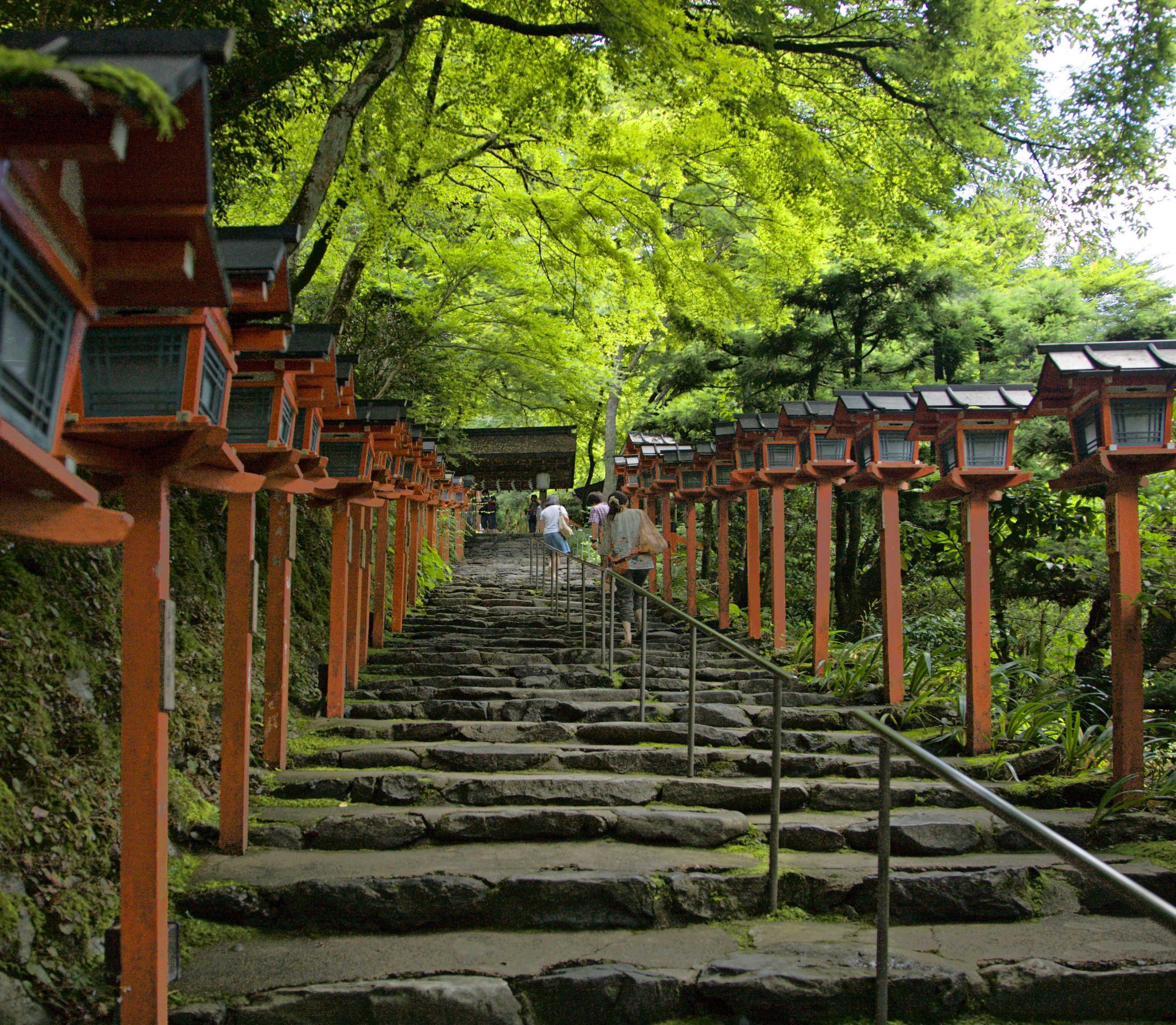
Photo: Chi King on Wikimedia Commons (CC BY 2.0)

North of central Kyoto, the city gives way to cedar forest and two narrow valleys. In one is Kifune Shrine, the head shrine of Japan's gods of water, reached by a stairway of red lanterns. In the other is Kurama Temple, a mountain temple where a boy who became one of Japan's most famous samurai is said to have learned swordsmanship from the tengu. A forest path links the two over the mountain. This guide explains what makes each one special, how to do the hike, opening hours and fees for 2026, and the best time to go.
The short version
- Kifune Shrine: no entrance charge. Open 6 am to 8 pm until November 30, with shorter hours in winter.
- Kurama Temple: ¥500 to enter. The main hall is open 9 am to 4:15 pm. The cable car costs ¥200 each way for adults.
- The hike: start at Kurama and finish at Kifune. Allow about 2 hours, and wear proper shoes.
- Getting there: Eizan Railway from Demachiyanagi Station, about 30 minutes to Kurama.
- In 2026: Kifune's autumn light-up runs from November 7 to 24. Kurama's cable car stops on the morning of November 27 and from December 21 to 25.
Kifune Shrine: the source of the water
Kifune is the head of about 2,000 shrines to the god of water across Japan. No one knows when it was founded, but the shrine's records mention a rebuilding in 677, so it was already old by then. Its god, Takaokami, is a dragon who controls rain, and who sends water up from the ground a little at a time. In the old myths, this god of water was born from the blood of the god of fire.
Emperors took this seriously. When there was a drought, the court sent the shrine a black horse to pray for rain. When the rain wouldn't stop, it sent a white or red one.
A visit here is called sansha-mairi, a pilgrimage to three shrines along the valley:
The main shrine (Hongu)
This is where the lantern stairway leads, the view you'll see in most photos of Kifune. At the top, spring water from Mt. Kibune pours from the stone wall in front of the hall. It's also where you try the water fortune (mizuura mikuji): lay the paper on the spring water, and your fortune appears. The shrine moved here in 1055 after a flood washed away the original site, and the present buildings were rebuilt in recent decades.
Yui-no-yashiro, the shrine of love
The middle shrine has a sad story behind it. The goddess Iwanaga-hime was rejected by a suitor who only wanted her younger sister, and she stayed here to bring good matches to others. In the Heian period, the poet Izumi Shikibu came to pray over her husband's wandering heart, and the shrine says her wish came true. It has been known for matchmaking ever since.
The inner shrine (Okumiya)
Further up the valley, among tall trees, is the place where it all began. In one legend, the goddess Tamayori-hime sailed from what is now Osaka Bay, up the Yodo, Kamo and Kifune rivers, in a yellow boat, and built a shrine where she found a spring. The boat is said to lie hidden under a mossy mound of stones beside the hall. Under the hall itself is a "dragon hole", which no one is allowed to see. A goddess of the same name is honoured at Shimogamo Shrine, further down the same river.
Eating over the river
The road to the shrine runs beside the Kifune River, lined with inns and restaurants. In summer, they build dining platforms over the water, called kawadoko. It's a famous way to escape the heat of the city, so book ahead.
Kurama Temple: the mountain of the tengu
Kurama Temple began in 770, according to its own history, when the monk Gantei followed a dream and a white horse up the mountain. He was attacked by a demon woman, saved by the guardian Bishamonten, and built a hut to honour him. In 796, soon after Kyoto became the capital, a court official named Fujiwara no Isendo built a proper temple here.
It became a favourite retreat for the Heian court. Sei Shonagon listed its winding path in The Pillow Book as one of the things that are near yet far away. The temple also identifies itself with the unnamed temple in the northern hills where Prince Genji first sees young Murasaki in The Tale of Genji.
The boy and the tengu
The story most people know is that of Minamoto no Yoshitsune, then called Ushiwakamaru. He came to the temple at about 7 and left at about 16. By day he studied as a novice. By night, legend says, he slipped up to the valley of Sojogatani, where the long-nosed tengu taught him the arts of war. He went on to win the wars that destroyed the Taira clan, before his own brother hunted him down. His spirit is said to have come home to this mountain, and he is honoured here at Yoshitsune Hall.
What to see on the way up
- The Niomon gate: rebuilt in 1911, but its left door dates from the 1180s.
- The cable car: two minutes to the upper station, and the temple says it's the only licensed railway in Japan run by a religious body. The ¥200 is treated as a donation rather than a fare.
- Yuki Shrine: moved here in 940 to guard the north of the city. Villagers lit its way with torches, which is said to be the origin of the Kurama Fire Festival. Its hall, rebuilt by Toyotomi Hideyori, is an Important Cultural Property, and it sits on the walking path, so you'll miss it if you take the cable car.
- The winding path: the climb Sei Shonagon wrote about, called tsuzura-ori, still bare earth in places.
The main hall
At the top, the mountains open out in front of the main hall. Tigers stand guard instead of the usual lion-dogs, because Bishamonten is said to have appeared in the month, day and hour of the tiger. In front of the hall is the Kongo-sho, a paved star mandala that people stand on to connect with the energy of the universe. Kurama has its own faith, founded in 1947, which honours a single force called Sonten, in the three forms of love, light and power. Its main image is hidden, and it's shown only once every 60 years.
The Reihoden museum
A short walk beyond the main hall, the temple's museum holds the National Treasure statues of Bishamonten and his attendants, along with displays on the mountain's nature and on the poet Yosano Akiko, whose study was moved here. It's worth the ¥200, but check that it's open: it closes on Tuesdays and through the winter.
The hike over the mountain
The walk between the two is what makes this a day to remember. The temple calls this its route for strong walkers:
| Stage | Time on foot |
|---|---|
| Kurama Station to the Niomon gate | 3 minutes |
| Niomon gate to Yuki Shrine | 5 minutes |
| Yuki Shrine to the main hall, up the winding path | 20 minutes |
| Main hall to Maoden | 30 minutes |
| Maoden down to Kifune | 20 minutes |
| Kifune to Kibuneguchi Station | 40 minutes, or take the bus |
The stretch beyond the main hall is the part to look forward to:
- Yoshitsune's stones and spring: a spring where he is said to have stopped for a drink on the way to his night lessons, and the stone he is said to have measured himself against before leaving for good.
- Kinone-michi, the path of roots: the rock here is so hard that the trees can't grow down, so their roots spread over the ground in a tangled web. It's said that the young Yoshitsune trained here too.
- Maoden: a small hall deep in the forest, on rocks that have been worshipped since ancient times as the place where the great spirit Mao-son came down to earth.
After Maoden, the path drops to the temple's west gate, with the road through Kibune just beyond. A few things to plan for:
- Shoes: the temple keeps its paths as natural earth and leaves fallen trees where they lie, so this isn't a stroll. Roots and stairs get slippery in the rain.
- Timing: leave Kurama with plenty of daylight. In winter, ask about snow before you commit.
- If you don't want to hike: take the train between the two instead. Kifune is one stop back from Kurama on the Eizan line, at Kibuneguchi.
Opening hours and fees
Kifune Shrine
| Details | |
|---|---|
| Main shrine, May 1 to November 30 | 6 am to 8 pm |
| Main shrine, December 1 to April 30 | 6 am to 6 pm (8 pm on January 1 to 3) |
| Entrance | No charge, open all year |
| Charms and stamps office | 9 am to 5 pm (9 am to 8 pm during the light-up) |
| Autumn light-up, 2026 | November 7 to 24, sunset to 8:30 pm, at all three shrines |
Hours can change for ceremonies: on two days in October 2026, for example, the main shrine closed at 5 pm. You can reach the shrine on 075-741-2016.
Kurama Temple
| Details | |
|---|---|
| Main hall | 9 am to 4:15 pm |
| Entry donation (aizan-hi) | ¥500 |
| Cable car, every 20 minutes | First up 8:40 am, last down 4:25 pm (June to August may differ). ¥200 each way for adults, ¥100 for elementary school children and under |
| Cable car stops, 2026 | Morning of November 27, and December 21 to 25 |
| Reihoden museum | 9 am to 4 pm. ¥200. Closed on Tuesdays (or the next day after a public holiday) and from December 12 to the end of February |
The last cable car up leaves at 4:20 pm, but by then the main hall is closed, so aim to be up much earlier. You can reach the temple on 075-741-2003.
When to go
| Season | What to expect |
|---|---|
| Spring | Fresh green maples on the line from late April. Kurama was famous for its cherry trees as far back as the Edo period |
| June 1 | The Kifune Festival, the shrine's most important event, when its portable shrine is carried through the village |
| Summer | A cool escape from the city, with river dining at Kibune. The Water Festival is on July 7 |
| October 22 | The Kurama Fire Festival |
| November | Peak autumn leaves, and Kifune's evening light-up. The busiest time of year |
| Winter | Quiet, and beautiful under snow. Snow can stop the buses, so check before you go |
The Maple Tunnel. On the way there, the Eizan Railway passes through about 250 metres of maples between Ichihara and Ninose stations. You can only see it from the train. From November 7 to December 6, 2026, trains slow down through it, and it's lit up after dark.
The Kurama Fire Festival is one of Kyoto's most dramatic nights. Fires are lit around 6 pm, and by about 8 pm, giant burning torches fill the steps below the temple gate. The village is small, so expect long waits, and check your way home before you go.
One more thing the two have in common: both claim the Japanese bean-throwing tradition of Setsubun. Kifune points to an old tale that places its origin there, while Kurama says Kyoto's custom comes from its own February ritual.
Getting there
- To Kurama by train: take the Keihan Line to its last stop, Demachiyanagi, then the Eizan Railway to its last stop, Kurama, about 30 minutes. The temple gate is 3 minutes on foot.
- To Kurama by subway and bus: take the Karasuma Line to Kokusaikaikan, then a Kyoto Bus for Kurama Onsen to the Kurama stop, about 25 minutes.
- To Kifune: take the Eizan Railway to Kibuneguchi, then Kyoto Bus 33 to Kibune, and walk about 5 minutes. You can also walk from the station, which is about 2 km or 30 minutes.
- From Kyoto Station: JR Nara Line to Tofukuji, then the Keihan Line to Demachiyanagi. City bus 4 also goes to Demachiyanagi, in about 30 minutes.
- By car: about 40 minutes from Kyoto Station. Kifune has very few parking spaces (¥1,000 for 2 hours), and Kurama Temple has none of its own. Public transport is much easier.
See Kyoto with a private guide
This is a long day with a train, a bus, a steep path and a thousand years of legend. A private guide makes it simple. They can handle the connections, change the plan if the weather turns or you'd rather take it slowly, and tell you who Yoshitsune was while you're standing on the roots where he's said to have trained. On a private tour, it's just you and your own group, never strangers, so you can go at your own speed.
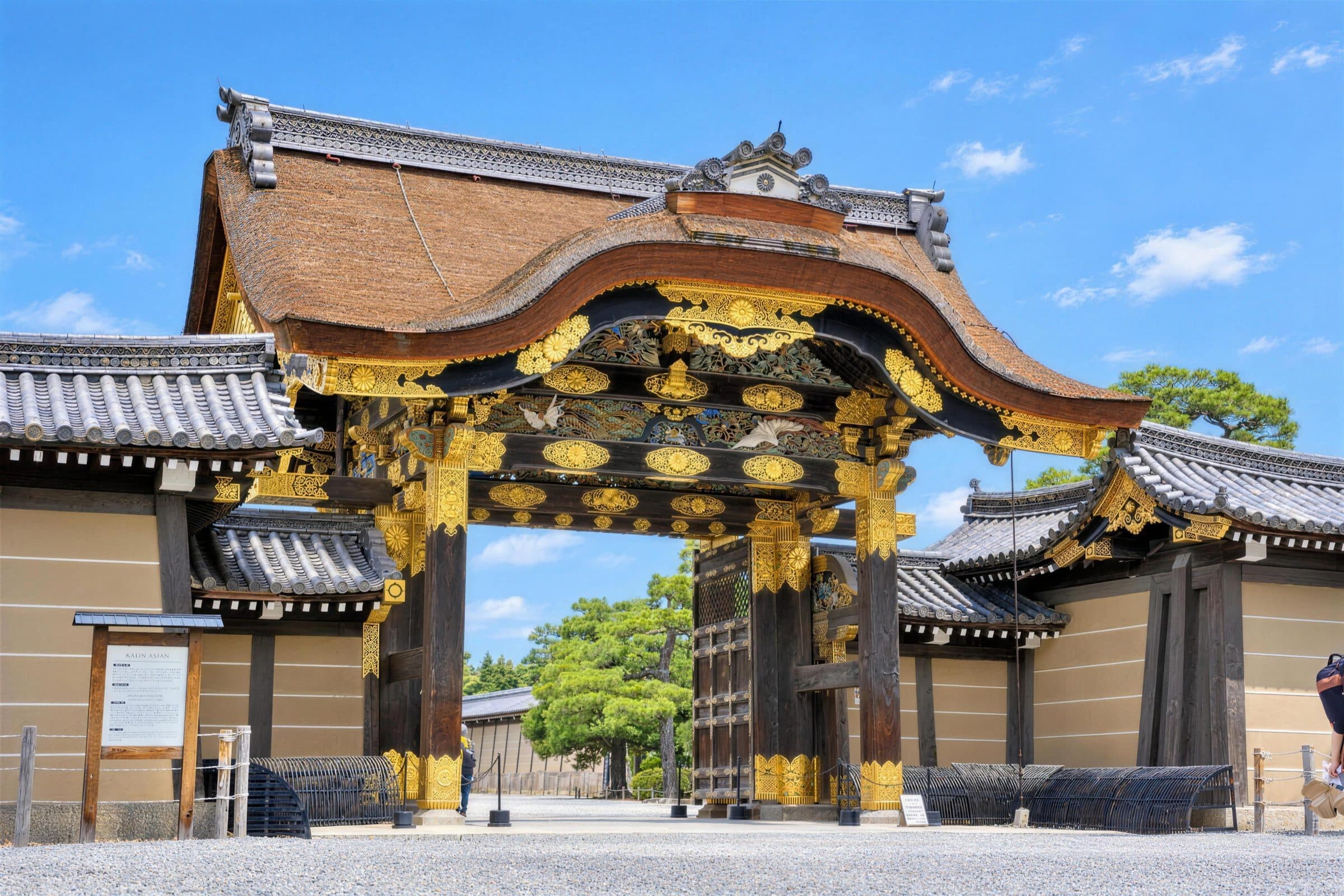
The emperors who sent those horses to Kifune lived in the capital below, and our private Nijo Castle and Imperial Palace tour takes you through the shogun's castle and the emperors' palace with your own English-speaking guide.
Book this tour
Kyoto: 2.5-Hour Private Nijo Castle & Imperial Palace Tour
A private walk through the shogun's Nijo Castle and the Kyoto Imperial Palace, with an English-speaking guide.
2 h 30 min · Kyoto · Nijo
We don't run a set tour to Kifune and Kurama, but we can look at arranging a private day there on request. Get in touch with your dates and what you'd like to see, and we'll let you know what we can do.
Please note. We wrote this guide in November 2026. Hours, fees and 2026 dates come from the official websites of Kifune Shrine, Kurama Temple and the Eizan Railway. Kifune's winter hours come from travel guides. Times often change for ceremonies and the weather, so check before you go.
Sources
- Kifune Shrine: About the shrine (Japanese)
- Kifune Shrine: Visiting (Japanese)
- Kifune Shrine: News and 2026 light-up (Japanese)
- Kifune Shrine: Festivals (Japanese)
- Kifune Shrine: Access (Japanese)
- Kurama Temple: History (Japanese)
- Kurama Temple: Guide to the mountain (Japanese)
- Kurama Temple: Visiting and fees (Japanese)
- Kurama Temple: Access and walking routes (Japanese)
- Kurama Temple: Annual events (Japanese)
- Kurama Temple: Notices and cable car closures (Japanese)
- Eizan Railway: The Maple Tunnel (Japanese)
- Walkerplus: Kifune Shrine hours (Japanese)
- Kumamoto Nichinichi Shimbun: The 2026 Kurama Fire Festival (Japanese)
Frequently asked questions
Can you visit Kifune Shrine and Kurama Temple on the same day?
Yes, and most people should. They stand in neighbouring valleys, joined by a mountain path over Mt. Kurama. You can walk from one to the other, or go back down to the Eizan Railway line and change valleys by train and bus. Allow most of a day.
How long is the hike from Kurama to Kifune?
By the temple's own timings, it's about 75 minutes from the Niomon gate to Kifune Shrine if you walk the whole way: 25 minutes to the main hall, 30 to Maoden, and 20 down to Kifune. Allow about 2 hours with stops. The path is steep, with stairs and tree roots, so wear proper shoes.
Should I hike from Kurama to Kifune, or the other way?
Start at Kurama. The temple's main hall closes at 4:15 pm and its cable car stops soon after, while Kifune Shrine stays open later. Finishing at Kifune also puts you by the river for a late lunch or an early dinner.
How much does it cost to visit Kifune and Kurama?
Kifune Shrine has no entrance charge. Kurama Temple asks for a ¥500 donation to enter the mountain, plus ¥200 for adults each way if you use the cable car and ¥200 for the Reihoden museum.
Is it Kifune or Kibune?
Both. The shrine calls itself Kifune, and its name is written in old records with characters meaning "the root where energy is born". The village, the mountain and the station are usually Kibune.
What is the water fortune at Kifune Shrine?
It's called mizuura mikuji. You float a paper fortune on the spring water at the main shrine, and the words appear on it. Kifune is the head shrine of the gods of water, so it suits the place.
When are the autumn leaves at Kifune and Kurama?
Usually in November. The Eizan Railway says the maples on the way there begin to turn in early November, show mixed colours by mid-month and turn deep red in late November. In 2026, Kifune Shrine is lit up in the evenings from November 7 to 24.
When is the Kurama Fire Festival?
October 22 each year, at Yuki Shrine on the way up to Kurama Temple. Giant torches are carried through the village after dark. It gets very crowded and the village is small, so plan your way back in advance.