
Blog · 8 November 2026 · 7 min read
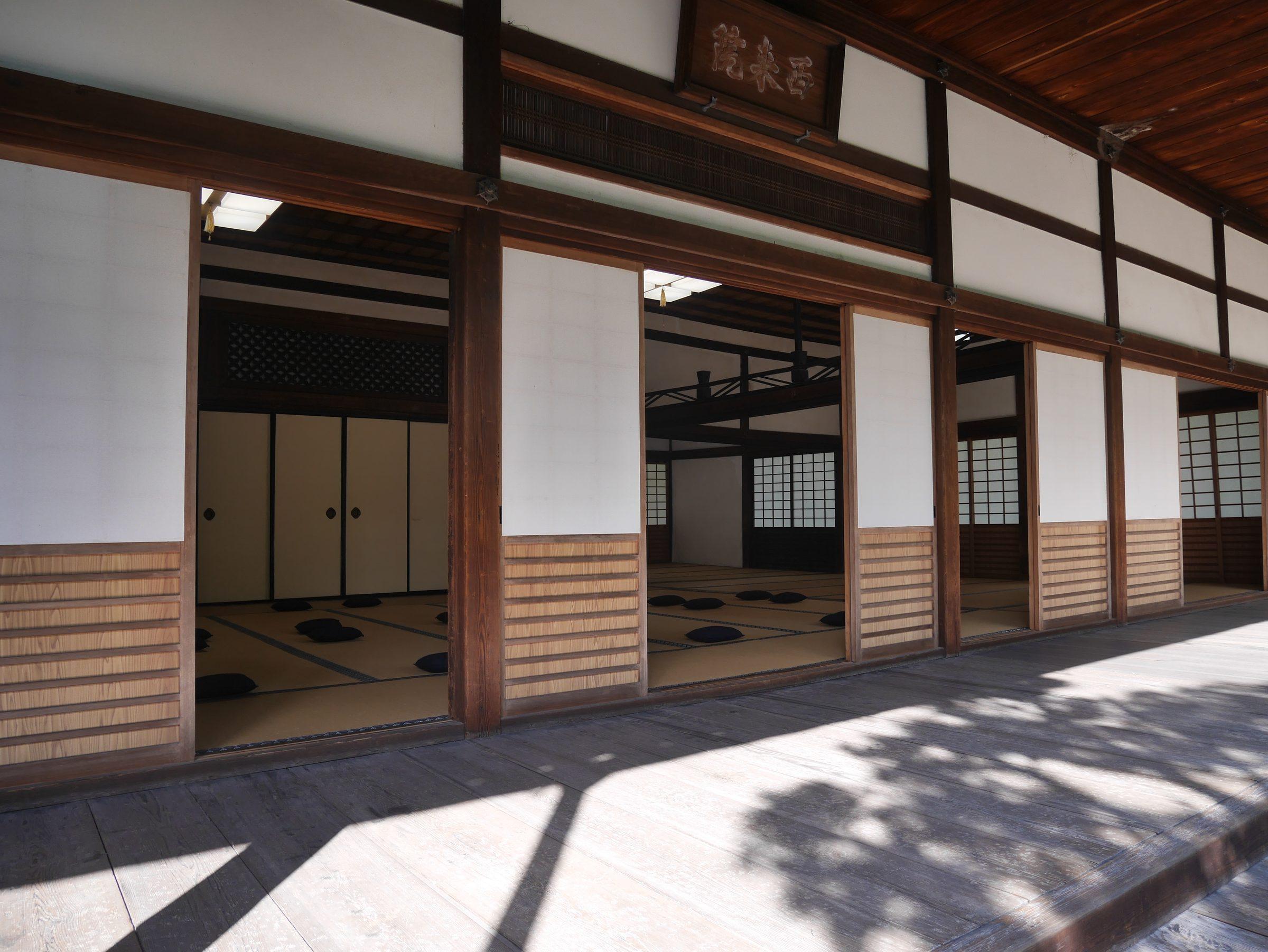
Photo: Haruo.takagi on Wikimedia Commons (CC BY-SA 4.0)

Just inside the north gate of Kennin-ji, a few minutes' walk from the busiest streets of Gion, is a Zen temple that most visitors walk straight past. Seirai-in was closed to the public for most of its long history. In 2024, after a major renovation, it opened its doors with a white dragon painted across the ceiling of its main hall and new gardens planted with about 1,200 orchids. This guide covers its history, what to see, opening hours and fees, and how to find it.
The short version
- What it is: a small sub-temple of Kennin-ji, the oldest Zen temple in Kyoto.
- Highlights: a white dragon ceiling about 13 metres long, a dry garden made with boulders from China, and orchid gardens.
- Tickets: ¥500 for adults, separate from Kennin-ji's ticket.
- Hours: 10 am to 5 pm, in open seasons only. Listings give the 2026 season as running to December 27.
- Getting there: just inside Kennin-ji's north gate, about 10 minutes on foot from Gion-Shijo Station.
A monk who came from the west
Seirai-in's founder is Rankei Doryu (Lanxi Daolong in Chinese), a Zen master born in Sichuan in 1213. In 1246, at the age of 33, he sailed to Japan to teach Zen. In Kamakura, the regent Hojo Tokiyori made him the first abbot of Kencho-ji, completed in 1253, one of the great Zen temples of eastern Japan.
In 1259, by imperial order, Rankei became the 11th abbot of Kennin-ji. According to the temple, he lived at a sub-temple called Seihon-in. He died in Japan in 1278 and was given the title Daikaku Zenji, "Zen Master of Great Awakening", by the emperor.
In the Oei era (1394 to 1428), one of Rankei's spiritual descendants rebuilt Seihon-in and renamed it Seirai-in. The name means "coming from the west". In Zen, the phrase recalls Bodhidharma bringing Zen from India to China, and it suits a temple founded by a monk who came across the sea from China.
Like most of Kyoto, the temple burned in the wars of the 15th and 16th centuries. It was rebuilt in the early 1600s, and the present main hall dates from 1677. Its main image is Jizo, the bodhisattva who protects children and travellers.
For centuries, Seirai-in was closed to visitors. The 750th anniversary of Rankei's death falls in 2028, and to prepare for it the temple renovated its buildings, rebuilt its gardens and, in March 2024, opened to the public for the first time.
The white dragon ceiling
Step into the main hall and look up. The Hakuryu-zu, or White Dragon, spreads across the ceiling, about 13 metres by 6 metres. It's the work of the Chinese visual artist Chen Man, given to the temple as an offering. A dragon on the ceiling is an old idea in Zen temples: the dragon is a guardian of the teaching and is said to bring down the rain of the Dharma. This one is entirely new, and its pale, almost ghostly figure looks nothing like the ink dragons of older halls.
Take a seat on the tatami and give it time. From the floor, you can take in the whole dragon at once.
The orchid gardens
The first character of Rankei's name, ran, means orchid, so the renovated Seirai-in became a temple of orchids. About 1,200 orchid plants were planted in its three gardens, chosen with the plant hunter Nishihata Seijun. The gardens were designed by the Nakane Garden Research Institute, one of Kyoto's best-known garden studios.
- Kyuka Shoren (the entrance garden): nine blue-green Awa stones, brought from Tokushima on Shikoku, set out in the shape of a lotus flower, with orchids around them.
- Gabi Joun (the dry garden): in front of the main hall, a dry landscape of raked gravel built around three large boulders from Mount Emei, one of the sacred Buddhist mountains of China, given by the Buddhist Association of China. It ties the temple back to its founder's home province of Sichuan, where Mount Emei stands.
- Tenchi (the courtyard): a small inner garden of bamboo and white sand.
Maples were planted too, with more planned, so the gardens should grow into their autumn colour over the coming years.
More to see
- The folding screens: a Chinese lion screen (Karajishi-zu), also by Chen Man, and a pair of gold screens called Toryumon, "the dragon gate", by the Kyoto painter Kimura Hideki. They show a carp swimming up a waterfall to become a dragon, an old symbol of success through effort.
- The stone vessel Enshu: by the sculptor Raku Masaomi, of the Raku family of tea-bowl makers. Orchid flowers are sometimes floated in it.
- The statue of Rankei Doryu: a seated statue made in 1676 by the Buddhist sculptor Kojo. Inside its base is a much older wooden head of Rankei, about 30 cm high, thought to have been carved in his lifetime or just after his death. Its eyes were once set with crystal.
- Goshuin: the temple offers seal stamps (goshuin) with designs from its artworks, including the white dragon.
Kennin-ji next door
Seirai-in sits inside the grounds of Kennin-ji, founded in 1202 by the monk Eisai, who brought Rinzai Zen (and, by tradition, the habit of drinking tea) back to Japan from China. It's the oldest Zen temple in Kyoto. Kennin-ji has its own ticket. Its best-known sights are the Twin Dragons on the ceiling of the Dharma Hall, painted by Koizumi Junsaku for the temple's 800th anniversary in 2002, and the Wind God and Thunder God screens by Tawaraya Sotatsu, whose original is kept at the Kyoto National Museum.
Seeing both on the same visit makes a good pair: two dragons from 2002 in the head temple, and a white dragon from the 2020s a few steps away.
Opening hours and fees
| Details | |
|---|---|
| Hours | 10 am to 5 pm |
| Open | Seasonal |
| 2026 season | To December 27 |
| Time needed | 15 to 30 minutes |
| Ticket | Adults | Junior & senior high | Younger |
|---|---|---|---|
| Entry | ¥500 | ¥300 | Free |
Seirai-in's opening dates change from year to year, and hours can change for temple ceremonies. The 2026 end date comes from a Kyoto special-opening listing, not the temple itself. The temple posts its schedule on Instagram (@seiraiin). It doesn't publish a phone number and takes enquiries by fax only, on 075-277-1118. It has also opened for special viewings run by the Kyoto Heritage Preservation Association, with different hours and a higher fee: in spring 2026, from March 1 to 8, it showed about 100 temple treasures for the first time.
When to go
- Late April and May: the orchids are in flower. This is when the gardens look their best.
- Autumn: the young maples are starting to colour the gardens, and Gion is at its busiest.
- Any time it's open: the dragon ceiling doesn't depend on the season. Come at opening time or late in the afternoon for the quietest hall.
Getting there
Seirai-in is in the north-east corner of the Kennin-ji grounds, just inside the north gate, at the southern end of Gion's Hanamikoji area. The address is 590 Komatsu-cho, Yamato-oji-dori Shijo-sagaru, Higashiyama-ku.
- Bus: Kyoto city bus 100 or 206 from Kyoto Station to Higashiyama Yasui, then about 5 minutes on foot.
- Train: about 10 minutes on foot from Gion-Shijo Station (Keihan line) or Kyoto-kawaramachi Station (Hankyu line).
See Kyoto with a private guide
Seirai-in is easy to miss, and most of what makes it special isn't written on a sign: why a Chinese monk sailed to Japan, why a dragon guards a Zen hall, and why the gardens are full of orchids. A private guide can bring those stories to life, fit Seirai-in in with Kennin-ji and the lanes of Gion, and check the opening dates for you. On a private tour, it's just you and your own group, never strangers.
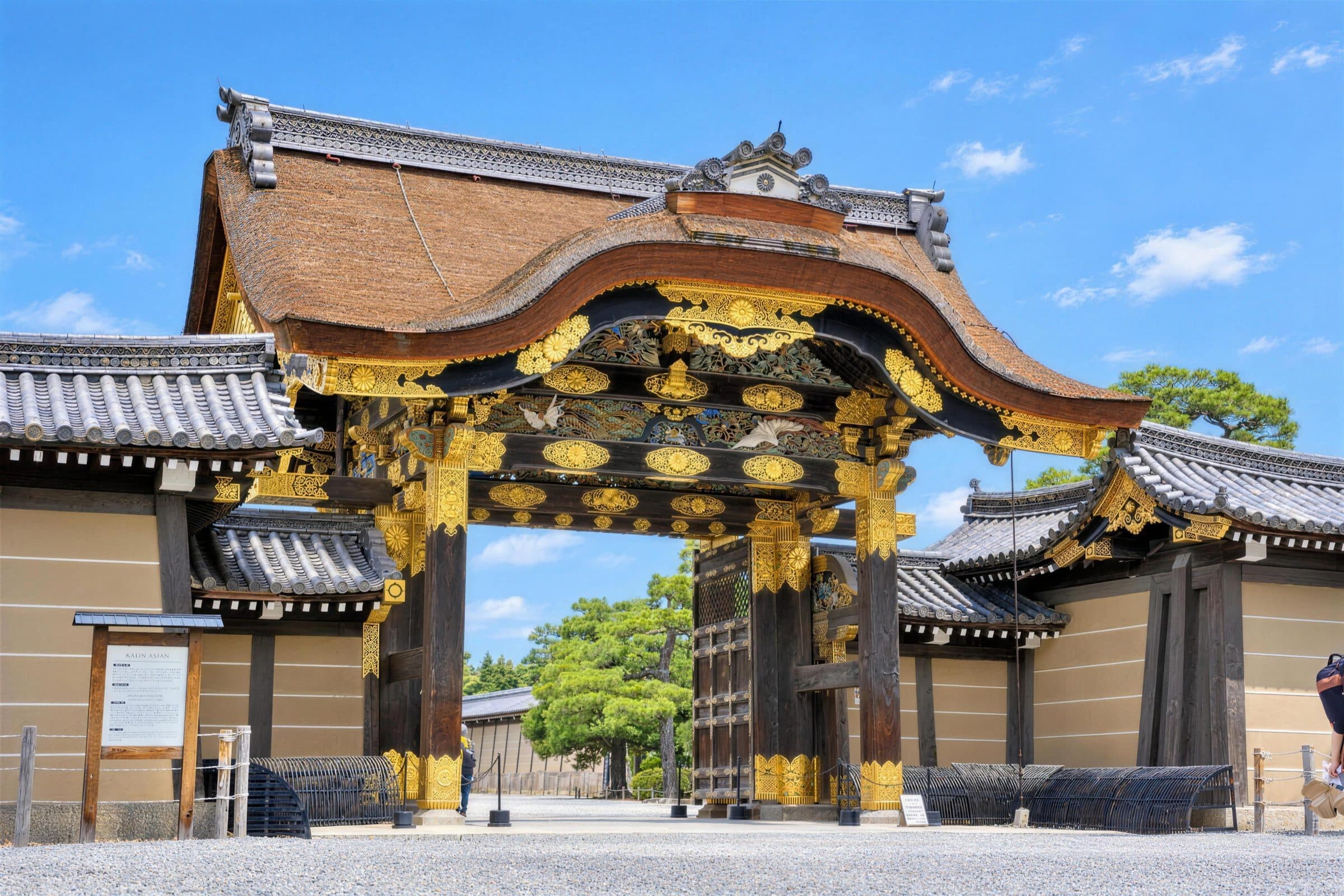
If you're interested in Kyoto's history, our private Nijo Castle and Imperial Palace tour takes you through the shogun's castle and the emperors' palace with your own English-speaking guide.
Book this tour
Kyoto: 2.5-Hour Private Nijo Castle & Imperial Palace Tour
A private walk through the shogun's Nijo Castle and the Kyoto Imperial Palace, with an English-speaking guide.
2 h 30 min · Kyoto · Nijo
We don't run a set tour to Seirai-in, but we can look at arranging a private visit on request. Get in touch with your dates and what you'd like to see, and we'll let you know what we can do.
Please note. We wrote this guide in November 2026. History, hours and fees come from Seirai-in's official website, and details of the artworks and gardens come from Japanese travel publications. The 2026 season dates come from a Kyoto special-opening listing, not from the temple itself. Seirai-in's opening dates change, so check its Instagram before you go. The photo above was taken in 2015, before the renovation.
Sources
- Seirai-in: Official website (Japanese)
- Souda Kyoto: Seirai-in special opening, 2024 (Japanese)
- Rurubu: Seirai-in's first special opening (Japanese)
- Kyoto Heritage Preservation Association: Seirai-in, spring 2026 (Japanese)
- Koi suru Kyoto tabi: Kyoto special openings 2026 (Japanese)
- Wikipedia: Lanxi Daolong
- Wikipedia: Kennin-ji
Frequently asked questions
What is Seirai-in?
Seirai-in is a small Zen sub-temple inside the grounds of Kennin-ji, the oldest Zen temple in Kyoto, just south of Gion. Its founder is the Chinese Zen master Rankei Doryu (1213–1278). It was closed to the public for most of its history and began opening to visitors in 2024, after a renovation that added a white dragon ceiling painting and new orchid gardens.
How much does it cost to visit Seirai-in?
¥500 for adults and ¥300 for junior high and high school students, according to the temple's website. Elementary school children and younger enter free. Seirai-in has its own ticket, separate from Kennin-ji's.
What are Seirai-in's opening hours?
10 am to 5 pm, but the temple notes that times can change for temple ceremonies. It's open in seasons rather than all year: listings for 2026 give the season as running until December 27. Check the temple's Instagram before you go.
Who painted the dragon ceiling at Seirai-in?
The Chinese visual artist Chen Man. Her white dragon (Hakuryu-zu) covers the ceiling of the main hall, about 13 metres by 6 metres. Don't confuse it with the Twin Dragons ceiling in Kennin-ji's Dharma Hall, painted by Koizumi Junsaku in 2002.
Why is Seirai-in called the orchid temple?
The first character of the founder's name, Rankei, means orchid. In the renovation, about 1,200 orchid plants were planted in the temple's three gardens. They flower from about late April into May.
How do I get to Seirai-in?
It's in the north-east corner of the Kennin-ji grounds, just inside the north gate. The nearest bus stop is Higashiyama Yasui (about 5 minutes on foot). From Gion-Shijo Station on the Keihan line or Kyoto-kawaramachi Station on the Hankyu line, it's about 10 minutes on foot.